
UX vs. UI Design: Beyond the Buzzwords – Understanding the Core Differences
Ferdausrj
Sep 8, 2025
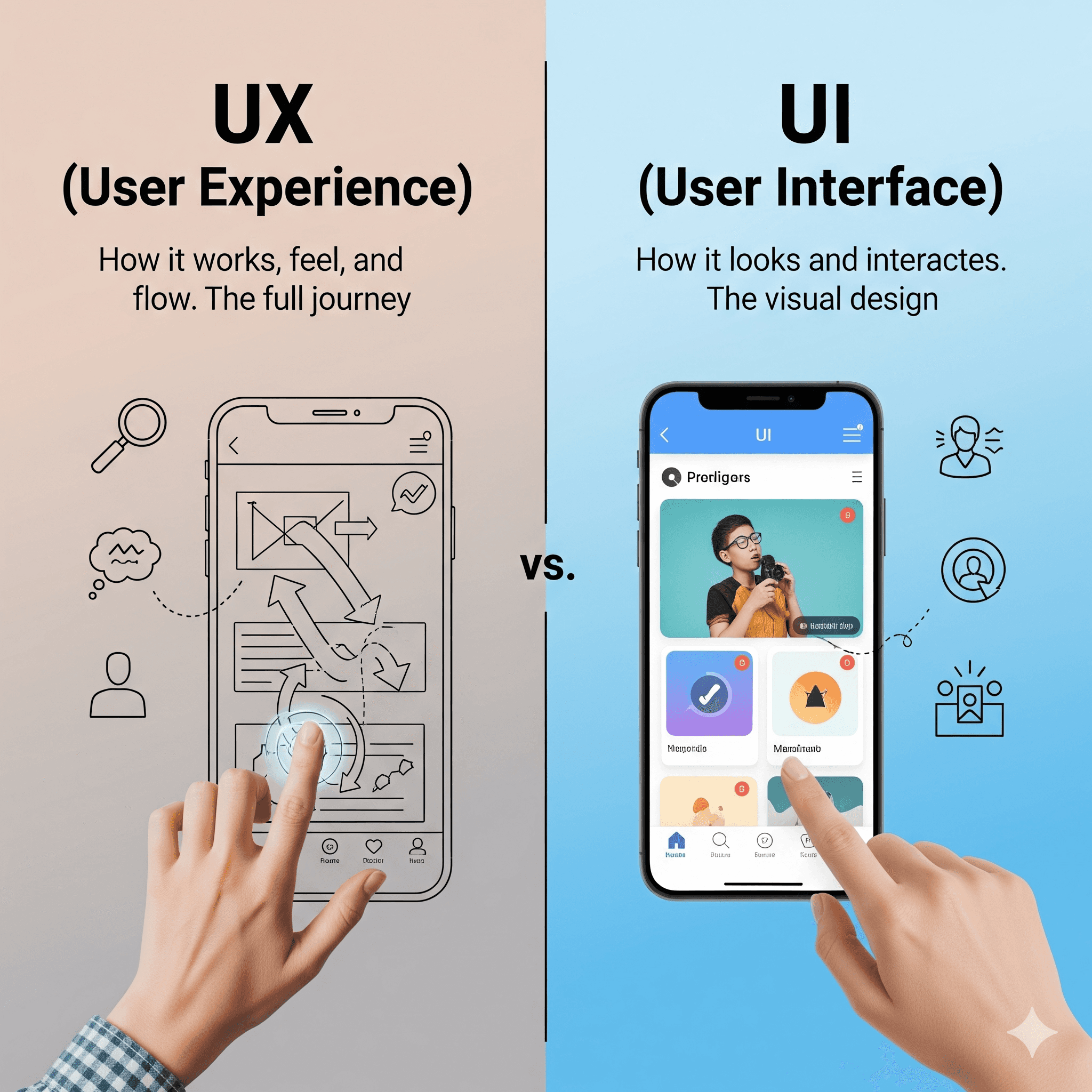
In the fast-evolving world of digital products, you've likely heard the terms UX and UI design thrown around interchangeably. While closely related and often practiced by the same professionals, they represent distinct disciplines, each critical to the success of any product, whether it's a mobile app, a website, or a piece of software.
Let's break down what each means, why they matter, and how they work together to create truly exceptional experiences.
What is UX Design? (User Experience)
Imagine buying a new coffee machine. You unbox it, set it up, brew your first cup, and clean it afterward. Every single step of that interaction – from the packaging to the taste of the coffee, to the ease of cleaning – contributes to your overall experience. This is, in essence, what UX design aims to address in the digital realm.
UX design is fundamentally about how a user feels and interacts with a product, system, or service. It encompasses the entire journey a user takes to achieve a goal. A UX designer's primary mission is to make that journey as efficient, enjoyable, and meaningful as possible.
Key aspects of UX design include:
Research: Deep dives into user needs, behaviors, motivations, and pain points through interviews, surveys, usability testing, and analytics.
Information Architecture (IA): Structuring content in a logical and intuitive way, so users can easily find what they're looking for. Think about the navigation menus on a website.
Interaction Design (IxD): How users interact with the product (e.g., clicking buttons, swiping, typing) and the resulting feedback from the system.
Wireframing & Prototyping: Creating low-fidelity (wireframes) and high-fidelity (prototypes) representations of a product to test user flows and gather feedback before significant development.
Usability Testing: Observing real users interacting with a product to identify areas of friction or confusion.
User Journeys & Flows: Mapping out the complete path a user takes to accomplish specific tasks.
Think of UX design as the blueprint and underlying structure of a house. It's about ensuring the layout makes sense, rooms are logically placed, and essential utilities (like plumbing and electricity) function flawlessly. A good UX ensures that a user can easily achieve their goals without frustration.
What is UI Design? (User Interface)
Now, consider that same coffee machine. Its color, the material of its casing, the style of the buttons, the font on the display, and how pleasing it is to look at – these are all elements of its user interface.
UI design is focused on the look and feel of a product. It's about designing all the visual elements a user interacts with. While UX deals with the overall experience, UI deals specifically with the visual presentation and interactivity of the product's interface.
Key aspects of UI design include:
Visual Design: The aesthetics of the product – color palettes, typography, iconography, imagery, and overall branding.
Layout & Grids: Arranging elements on a screen in an organized and visually appealing way.
Interactive Elements: Designing buttons, sliders, input fields, toggles, and other controls that users interact with.
Responsiveness: Ensuring the interface adapts seamlessly across different devices and screen sizes (desktops, tablets, mobile phones).
Animations & Transitions: Designing how elements move and transition, enhancing the user's perception of fluidity and engagement.
Branding & Style Guides: Applying consistent brand identity across the product and creating design systems to ensure consistency.
Think of UI design as the interior and exterior design of that house. It's the paint, the furniture, the lighting, the textures, and all the aesthetic choices that make the house beautiful and inviting. A good UI makes the product visually appealing and easy to interact with.
The Critical Relationship: Why They Need Each Other
While distinct, UX and UI design are inextricably linked and deeply interdependent. You can't have one truly excel without the other.
A brilliant UI with poor UX is like a stunning car that's impossible to drive or constantly breaks down. It looks fantastic, but using it is a nightmare. Users might be drawn in by the aesthetics but will quickly abandon the product due to frustration.
A robust UX with a weak UI is like a highly functional car that's ugly and uninviting. It works perfectly, but users might find it unappealing or difficult to understand how to operate due to a confusing visual layout. They might never even give the great functionality a chance.
The best digital products are born when UX and UI designers collaborate closely from the very beginning.
UX designers lay the groundwork, defining the user's journey and interaction logic.
UI designers then take that structure and bring it to life with appealing visuals and intuitive interactive elements.
The UX designer might determine what goes on a page and how it flows, while the UI designer decides where those elements are placed, what color they are, and how they animate.
Conclusion
Understanding the difference between UX and UI design is crucial for anyone involved in product development – from stakeholders and developers to, of course, the designers themselves. While UX focuses on the overall experience and functionality, UI concentrates on the visual and interactive elements.
Together, they form a powerful duo that ensures products are not only beautiful and engaging but also functional, intuitive, and truly meet the needs of their users. Investing in both is not just good practice; it's essential for creating products that users love and keep coming back to.
Categories
UX/UI Design
Web Design
App Design
Leadership
Related posts
Beyond Beauty: The Tangible ROI of Investing in Professional UX/UI Design
7 UX/UI Design Mistakes That Are Secretly Killing Your Conversions
The Inescapable Gravity of Convention: A Strategic Dissection of Jakob's Law in UI Design
Decrypting the Design Diamond: A Deep Dive into Strategic UX/UI Problem-Solving
The Algorithmic Imperative: Deconstructing UX/UI Problems and Engineering Digital Solutions